

F L O W T E C H - B 2 B E - C O M M E R C E P L A T F O R M
Built the frontend experience for a B2B e-commerce platform from the ground up, covering the complete customer journey from product discovery and catalogue browsing to authentication, cart management, and checkout. Developed reusable interfaces using Next.js, React, and TypeScript, with Redux for state management, Tailwind CSS for styling, and integrations with Payload CMS and Umbraco CMS.
-
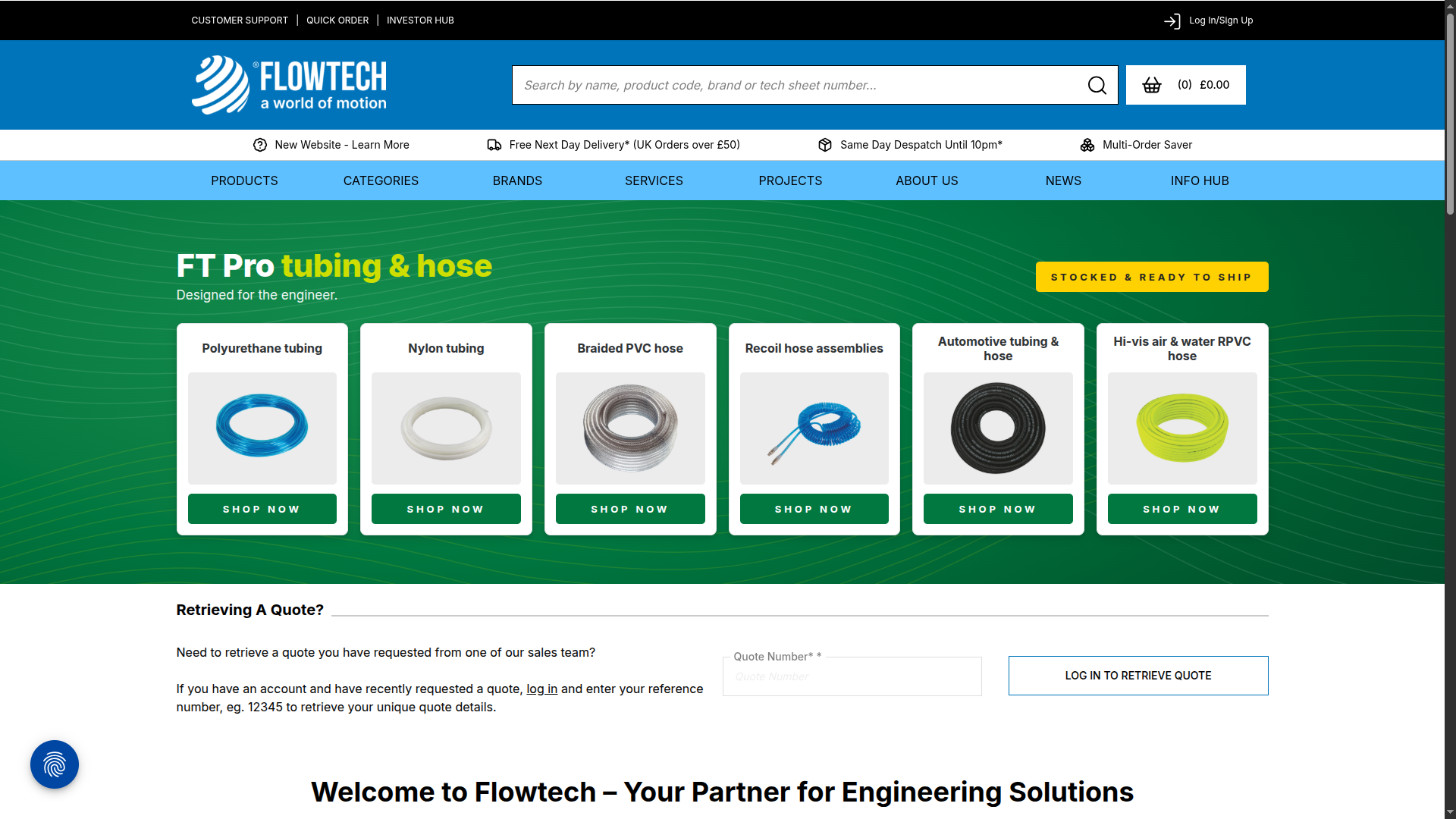
Flowtech storefront
-
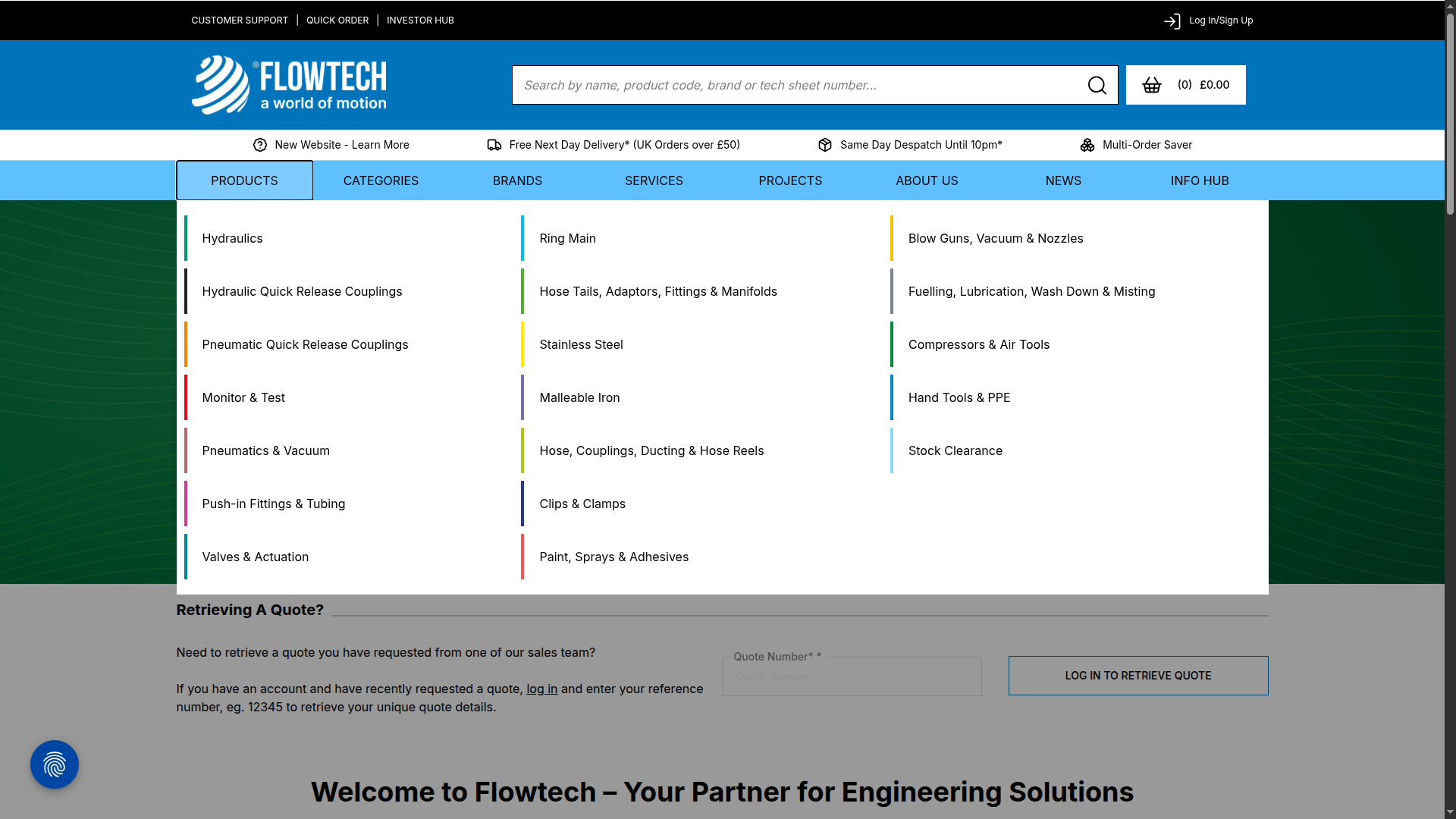
Product catalogue
-
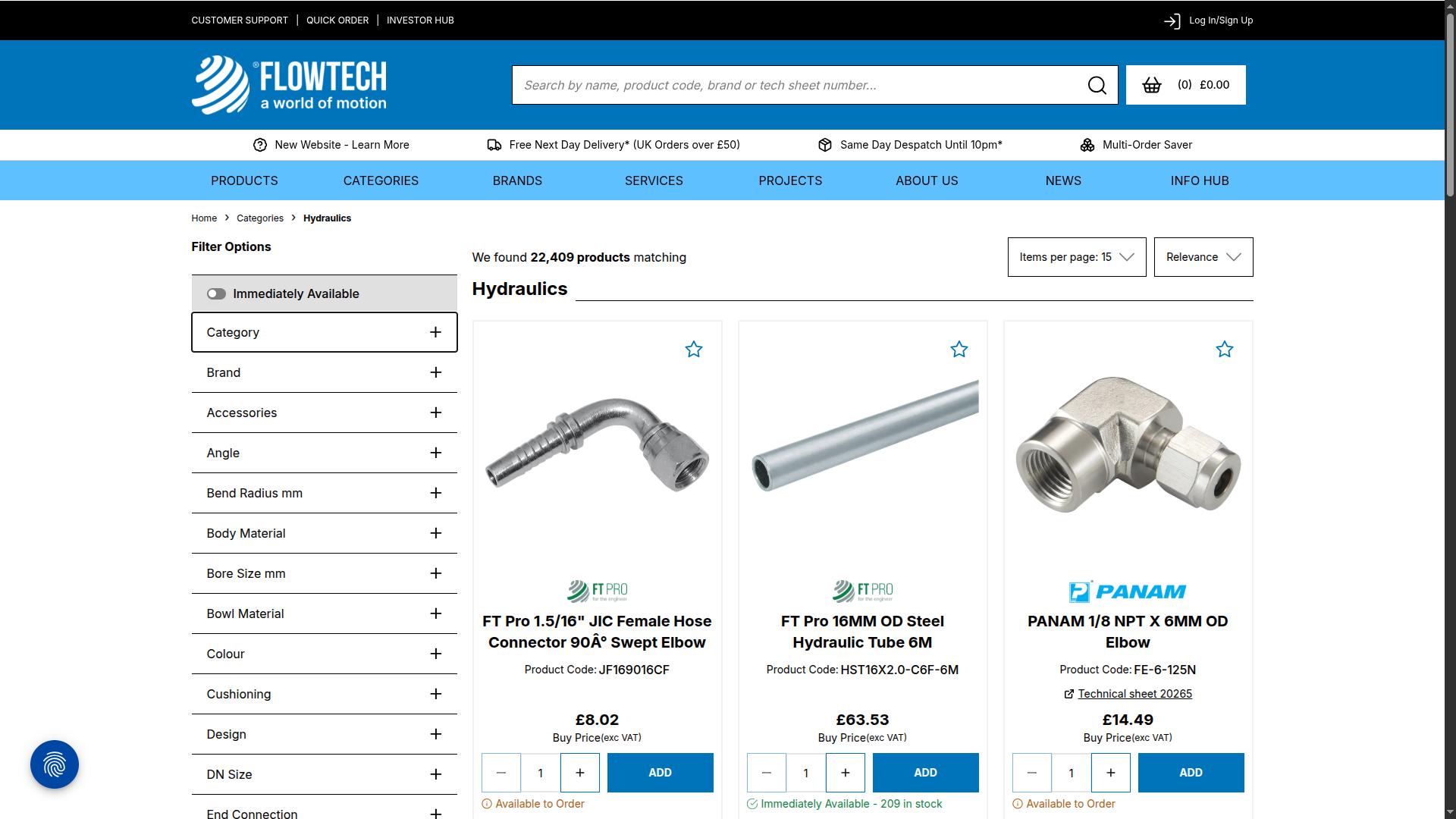
Product details
-
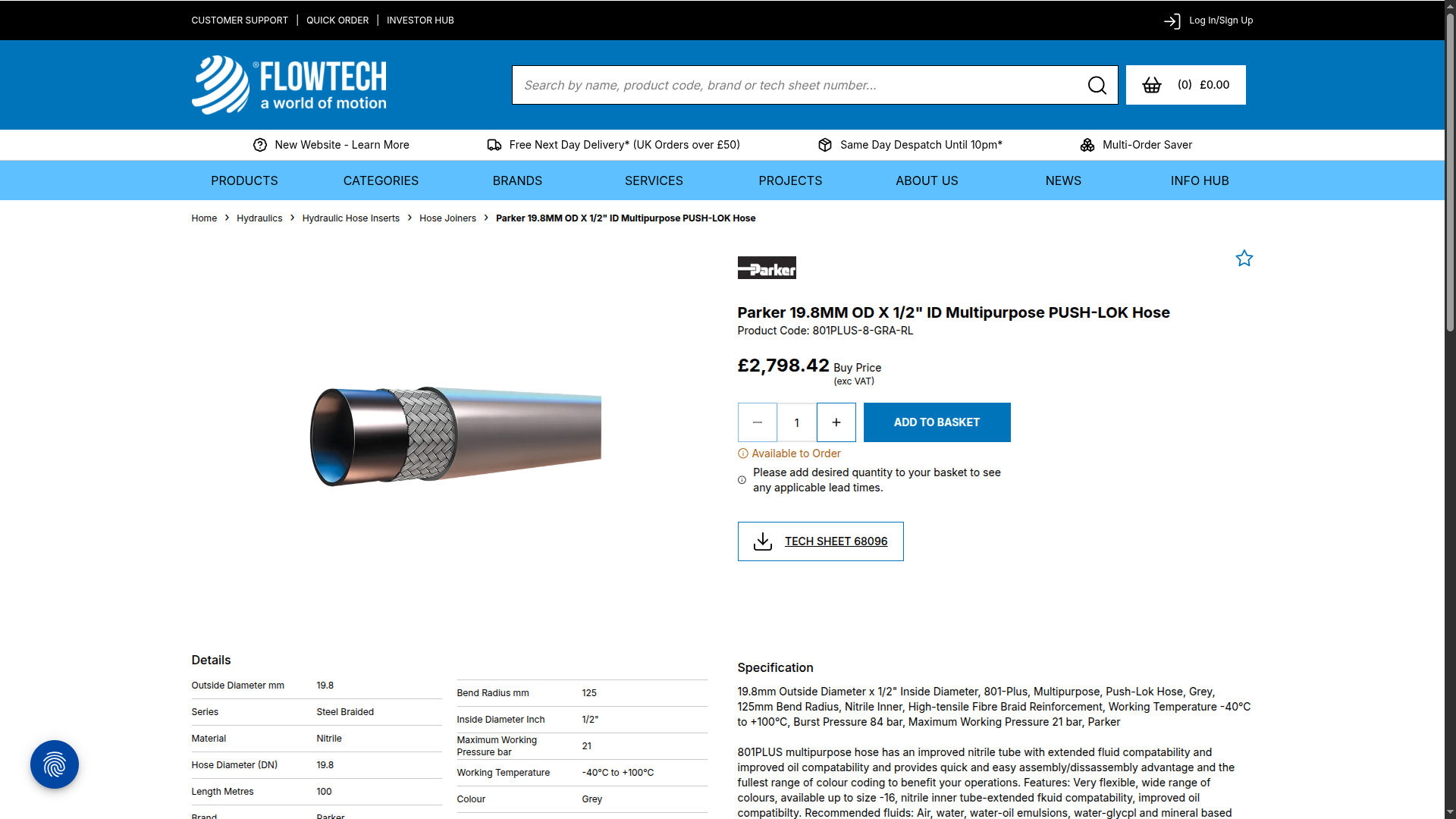
Cart and checkout
-
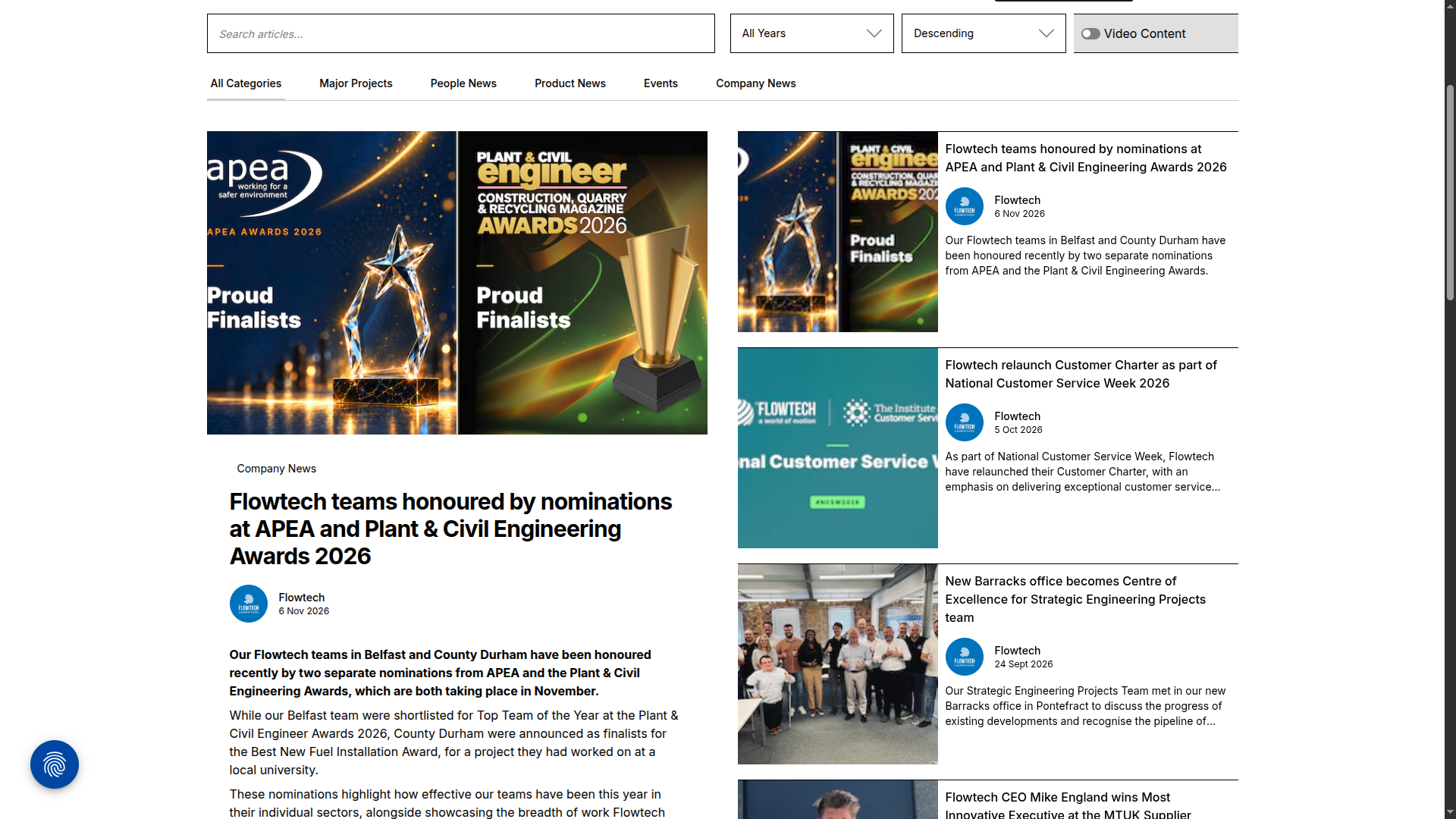
Authentication
-
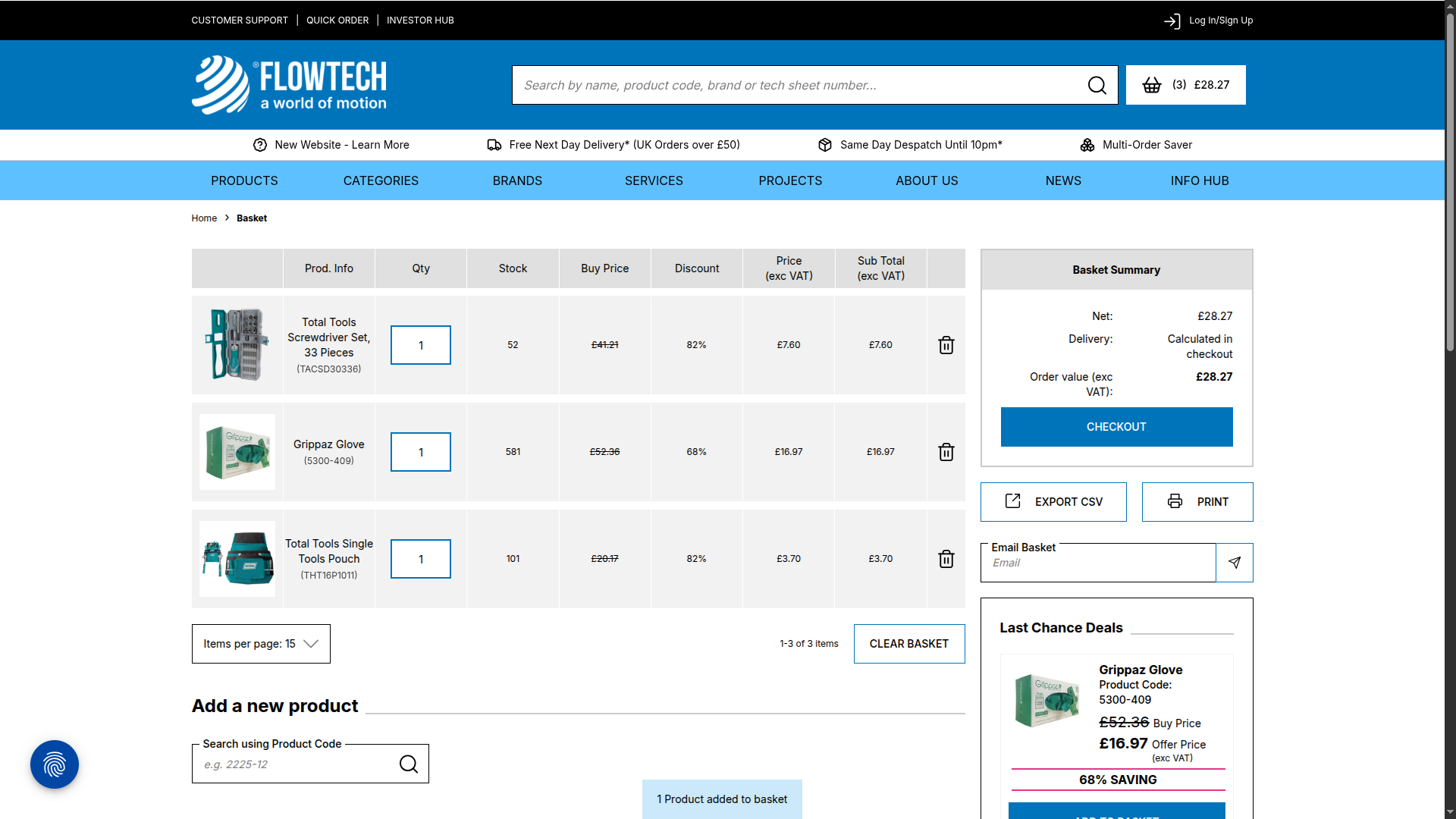
Responsive layout
Project Overview
- Worked on the frontend development of a B2B e-commerce platform for Flowtech.
- Built the customer-facing application from scratch using Next.js, React, and TypeScript.
- Developed the core shopping experience, from product discovery through checkout.
- Focused on creating reusable frontend components, maintainable application architecture, and responsive user interfaces.
- Integrated CMS-driven content and connected frontend experiences with the platform's underlying services.
Frontend Architecture & Foundation
- Established the frontend application structure using Next.js, React, and TypeScript.
- Developed reusable components and shared UI patterns for consistent experiences across the application.
- Implemented application state management using Redux.
- Built responsive layouts and interactive interfaces using Tailwind CSS.
- Organized frontend functionality into maintainable modules to support the development of different e-commerce features.
- Established reusable patterns for handling application state, user interactions, and data-driven interfaces.
Homepage & Content Management
- Developed the main homepage and its customer-facing content sections.
- Implemented reusable content components for promotional areas, navigation, and product discovery.
- Integrated Payload CMS and Umbraco CMS into the frontend content experience.
- Connected CMS-managed content with reusable page components.
- Built responsive content layouts that could accommodate different content structures.
- Focused on keeping content presentation consistent across the website.
Product Catalogue & Discovery
- Developed product catalogue and category browsing experiences.
- Implemented product listing pages with structured product information.
- Built product detail pages to present product information and purchasing options.
- Developed category navigation and product discovery interfaces.
- Implemented filtering and sorting interactions to help customers narrow down product selections.
- Built reusable product-related components for consistent presentation across catalogue views.
- Integrated frontend interfaces with product data and relevant application services.
Search & Filtering
- Developed interactive product filtering interfaces.
- Implemented user-facing controls for narrowing product catalogues.
- Integrated filtering interactions with application state and product data.
- Built reusable filtering components for catalogue and product discovery experiences.
- Focused on maintaining a consistent browsing experience across different catalogue views.
Authentication & Customer Experience
- Implemented customer-facing authentication interfaces.
- Developed login, registration, and related account access experiences.
- Built frontend flows for authenticated and unauthenticated customer interactions.
- Integrated authentication-related interfaces with the application's underlying services.
- Managed relevant frontend state and user interactions through Redux.
Cart & Checkout
- Developed shopping cart interfaces and customer-facing cart interactions.
- Implemented frontend functionality for managing selected products and quantities.
- Built checkout interfaces to support the purchase journey.
- Developed structured checkout flows for collecting and presenting customer and order information.
- Integrated cart and checkout experiences with the application's underlying commerce services.
- Focused on providing a consistent experience from product selection through order placement.
Testing & Application Monitoring
- Integrated Sentry for application error monitoring and frontend issue tracking.
- Implemented end-to-end testing using Playwright.
- Developed automated tests covering important customer-facing application workflows.
- Used testing to validate critical interactions across product discovery, authentication, and shopping experiences.
- Focused on improving frontend reliability and identifying regressions across key user journeys.
Engineering Challenges
- Building a complete e-commerce frontend from the ground up while maintaining consistency across different application areas.
- Structuring reusable components for product catalogues, product details, filtering, and shopping workflows.
- Managing application state across interconnected features using Redux.
- Integrating content from Payload CMS and Umbraco CMS into a unified frontend experience.
- Handling complex customer interactions across authentication, cart management, and checkout.
- Maintaining frontend reliability through automated end-to-end testing and application monitoring.
Outcome
- Built the frontend foundation for a complete B2B e-commerce experience.
- Delivered customer-facing interfaces across homepage, product catalogues, product details, authentication, cart, and checkout.
- Established reusable UI components and application patterns using React, Next.js, and TypeScript.
- Integrated CMS-driven content experiences using Payload CMS and Umbraco CMS.
- Added end-to-end testing with Playwright and application monitoring with Sentry.
T E C H S T A C K
N E X T . J S
Frontend framework and application routing
R E A C T
Component-based UI development
T Y P E S C R I P T
Type-safe frontend development
R E D U X
Application state management
T A I L W I N D C S S
Responsive styling and UI development
P A Y L O A D C M S
Headless content management integration
U M B R A C O C M S
Content management integration
S E N T R Y
Application monitoring and error tracking
P L A Y W R I G H T
End-to-end testing
W H A T I L E A R N E D
Building a complete frontend requires architectural consistency
Developing an e-commerce application from scratch reinforced the importance of establishing reusable components, predictable application structure, and consistent UI patterns before expanding individual features.
E-commerce experiences are interconnected workflows
Product discovery, filtering, authentication, cart management, and checkout are not isolated features. Their frontend state and interactions need to work together to provide a coherent customer journey.
State management becomes important as workflows grow
Managing interconnected customer-facing features with Redux highlighted the importance of predictable state transitions and clear boundaries between application features.
CMS integration needs flexible frontend architecture
Working with Payload CMS and Umbraco CMS demonstrated the importance of building reusable content components that can accommodate CMS-managed data and different page structures.
Automated testing protects critical user journeys
Using Playwright for end-to-end testing reinforced the value of validating complete customer workflows rather than testing individual UI components in isolation.
Monitoring is part of frontend quality
Integrating Sentry provided visibility into frontend errors and reinforced the importance of monitoring application behaviour beyond local development and testing.