

S K Y L O O V - R E A L E S T A T E & A N A L Y T I C S P L A T F O R M
A full-stack engineering case study covering the development of an agency listing quality scoring engine, Maqsam telephony integration, and DXB Transactions, an interactive real estate analytics platform for exploring Dubai property market transactions.
-
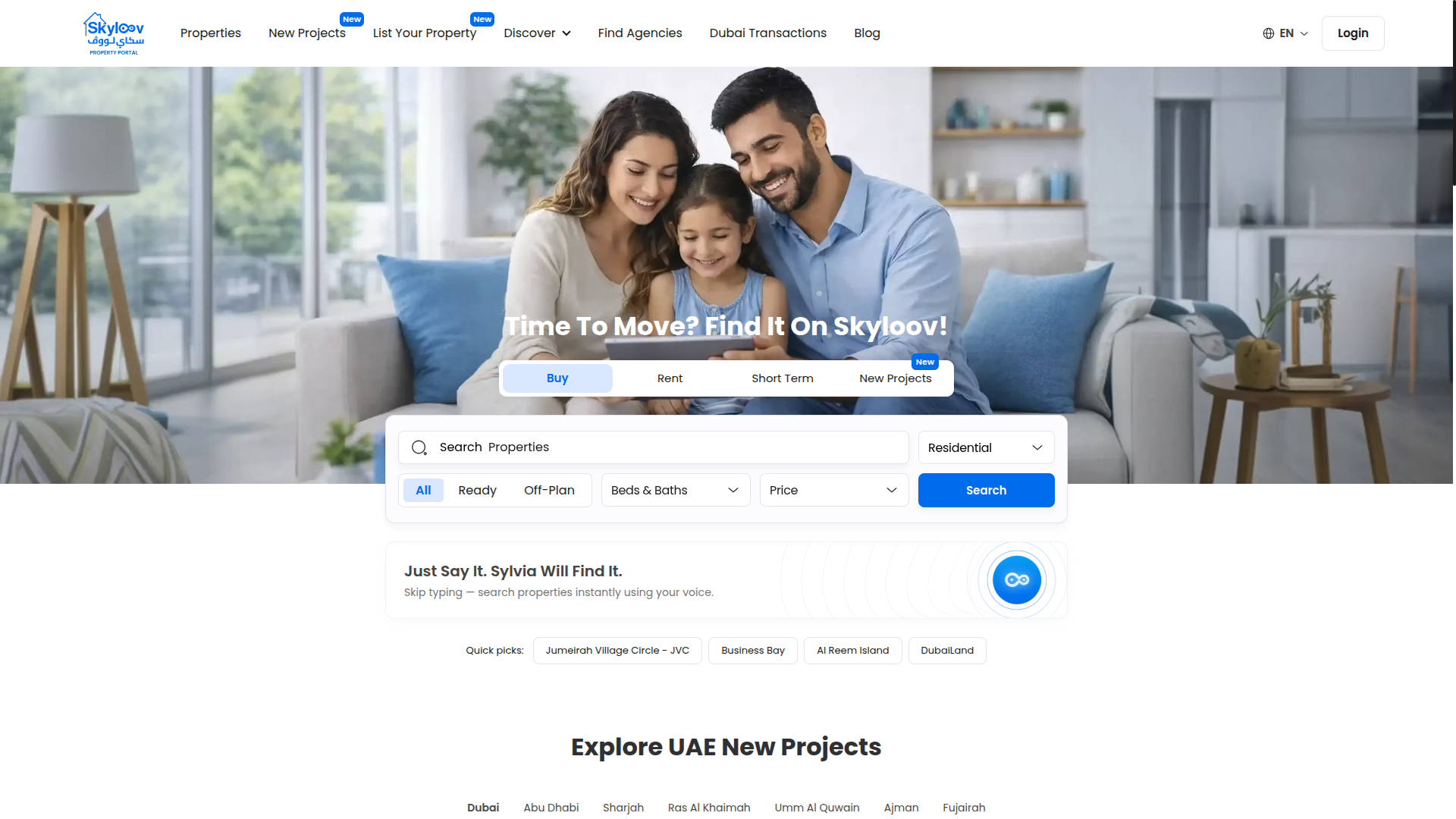
Skyloov Homepage
-

Skyloov Properties Page
-
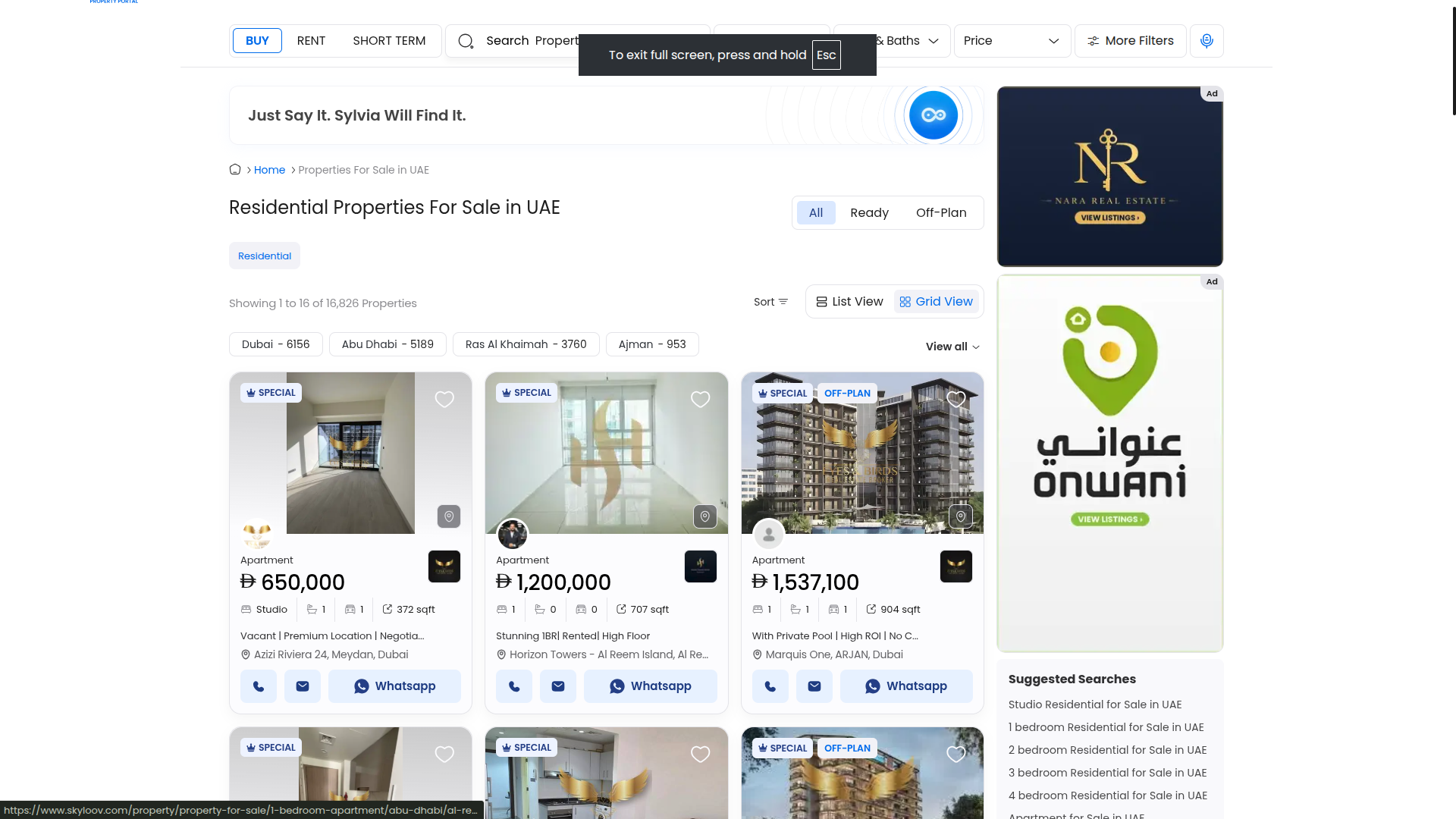
Skyloov Property Page
-
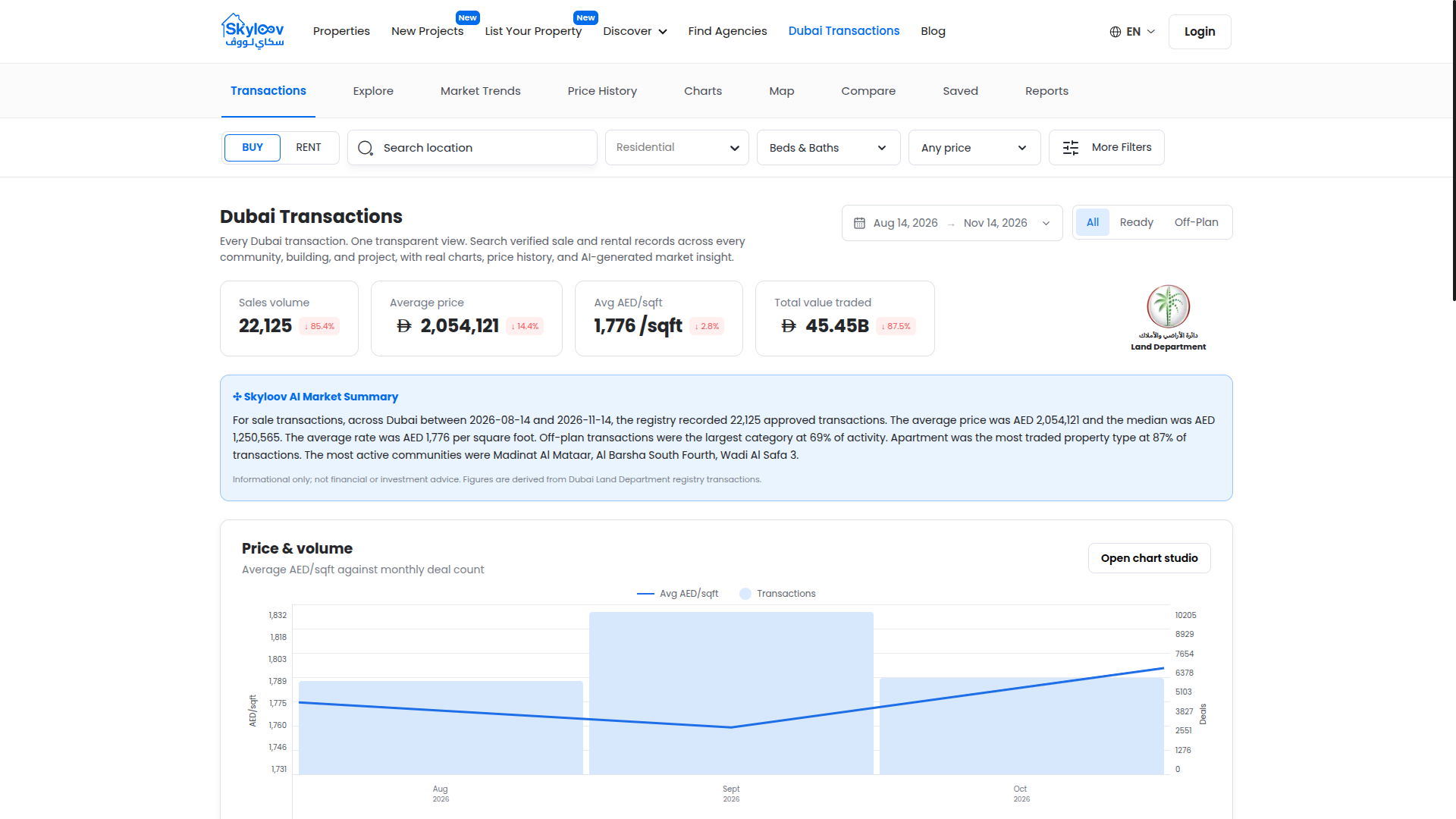
DXB Transactions analytics
-
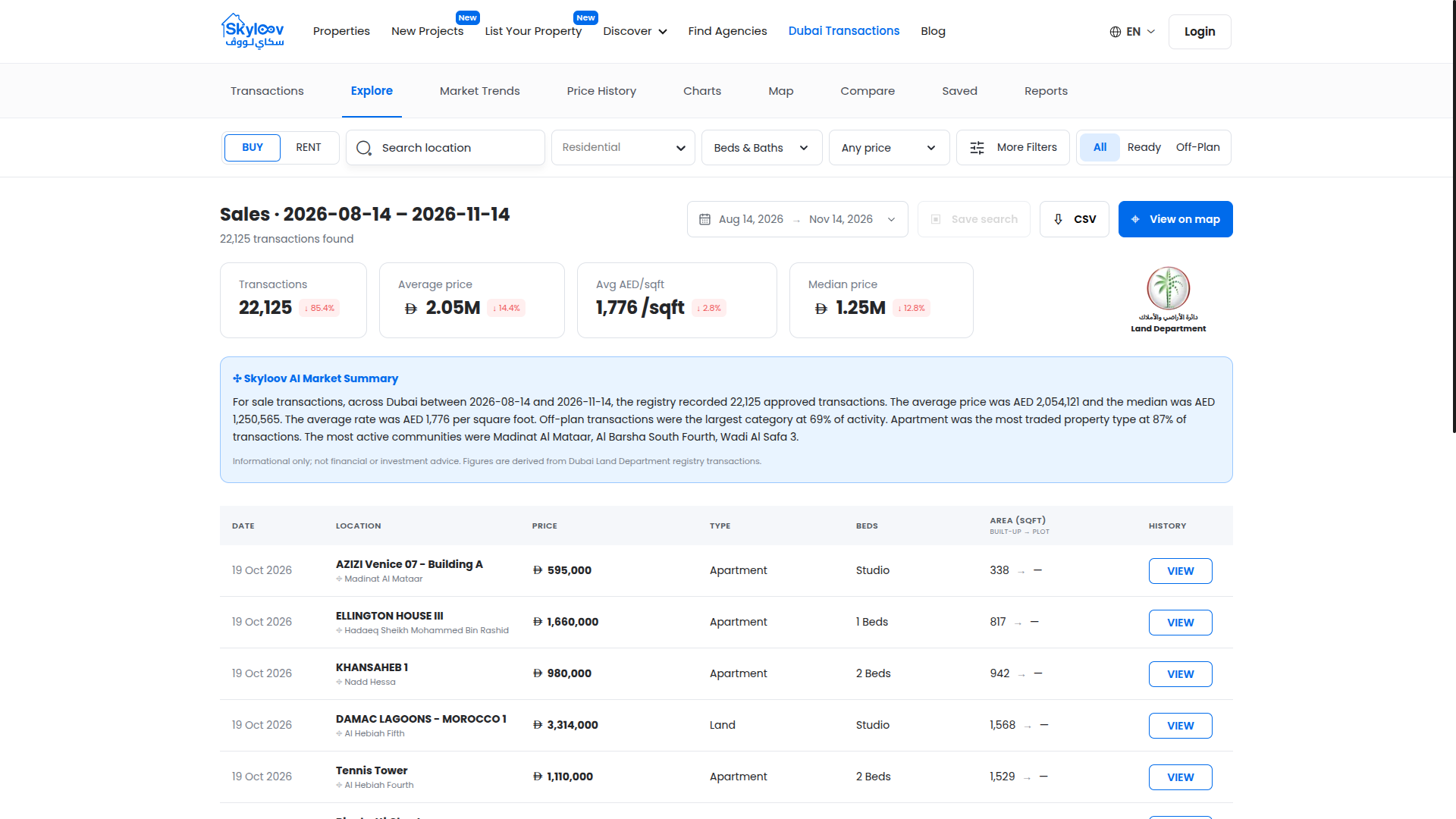
DXB Explore Transactions
-
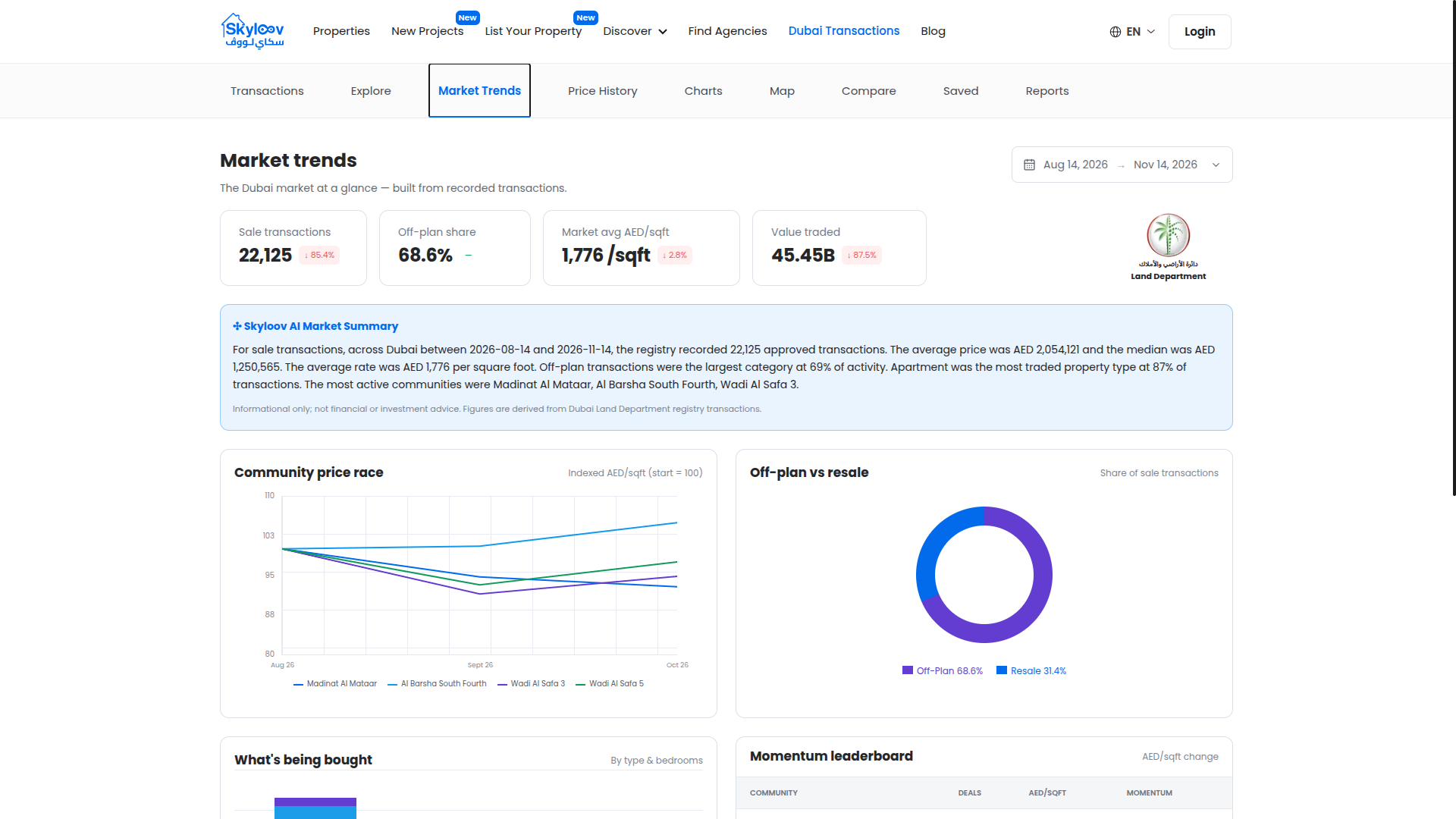
DXB Transactions Market Trends
-
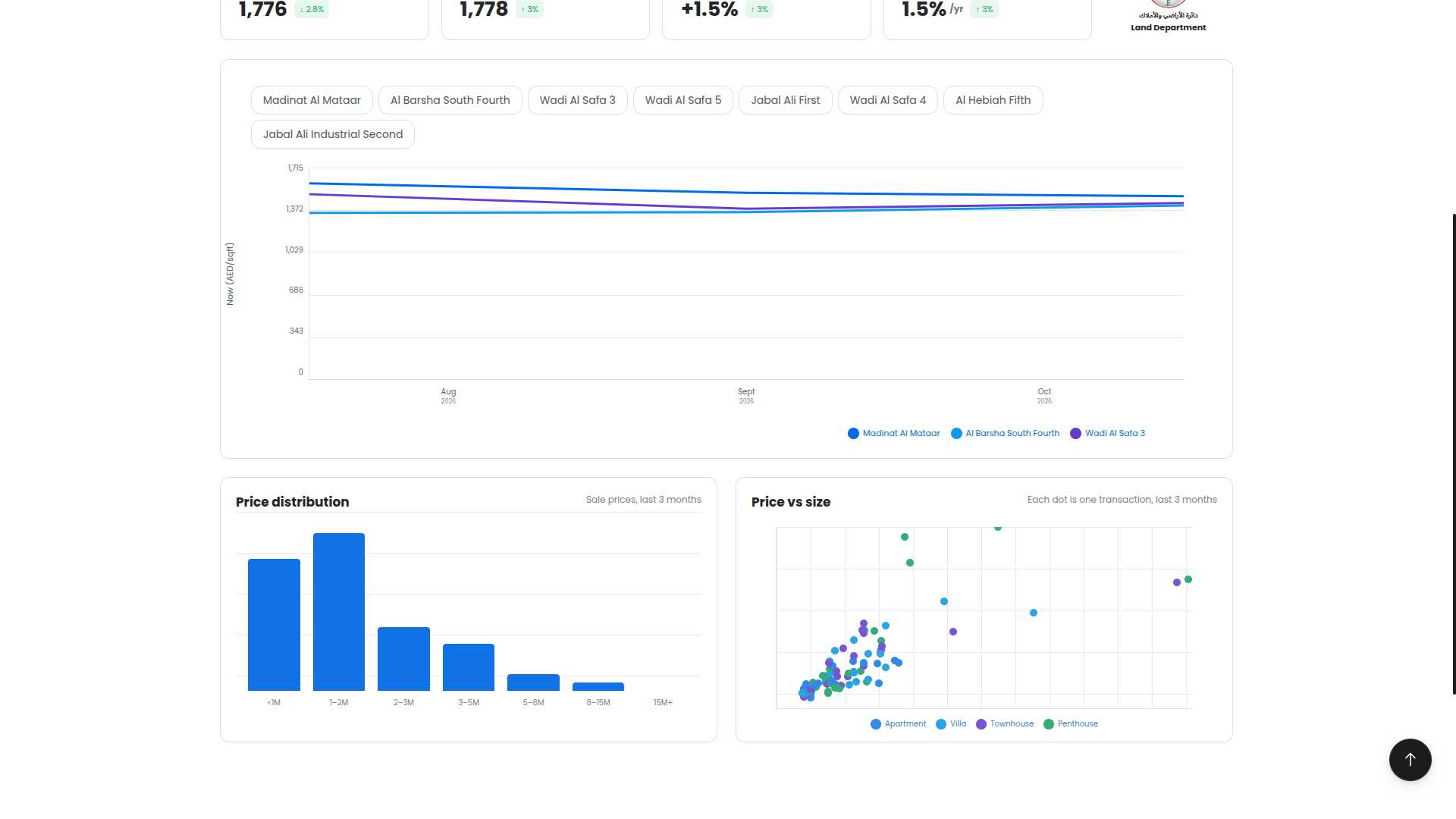
DXB Transactions Charts
-
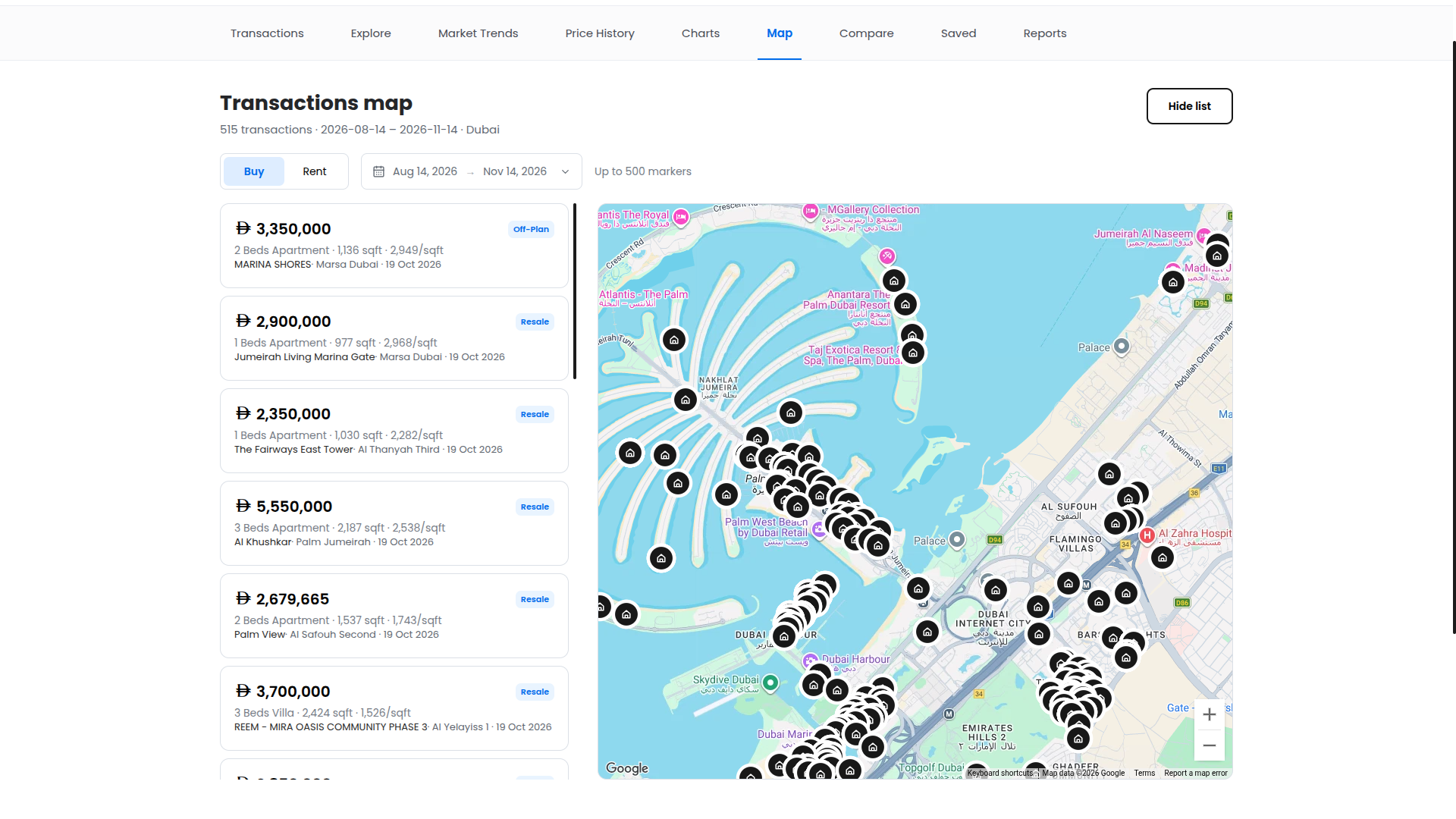
DXB Transactions Map
-
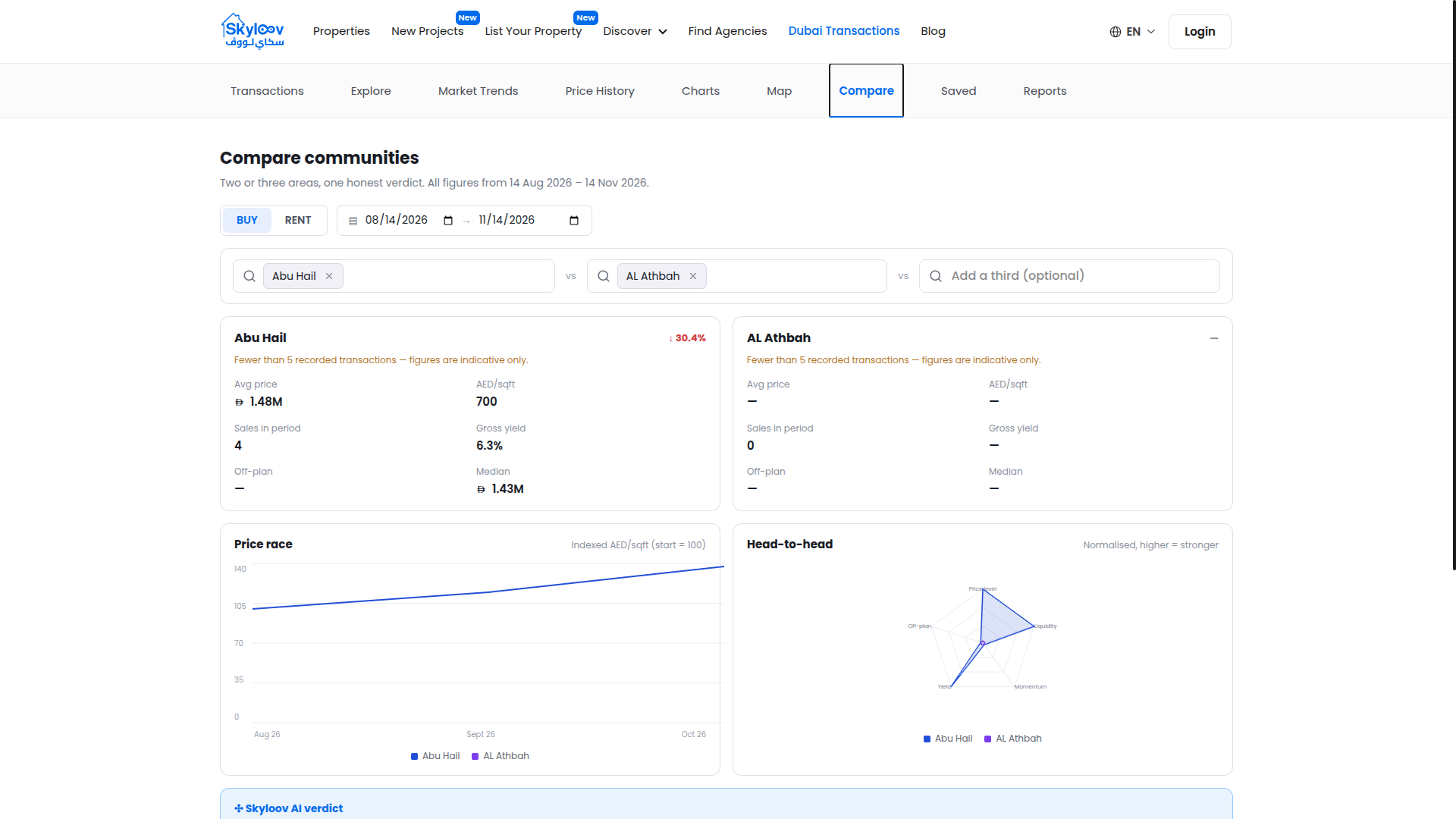
DXB Transactions Compare
-
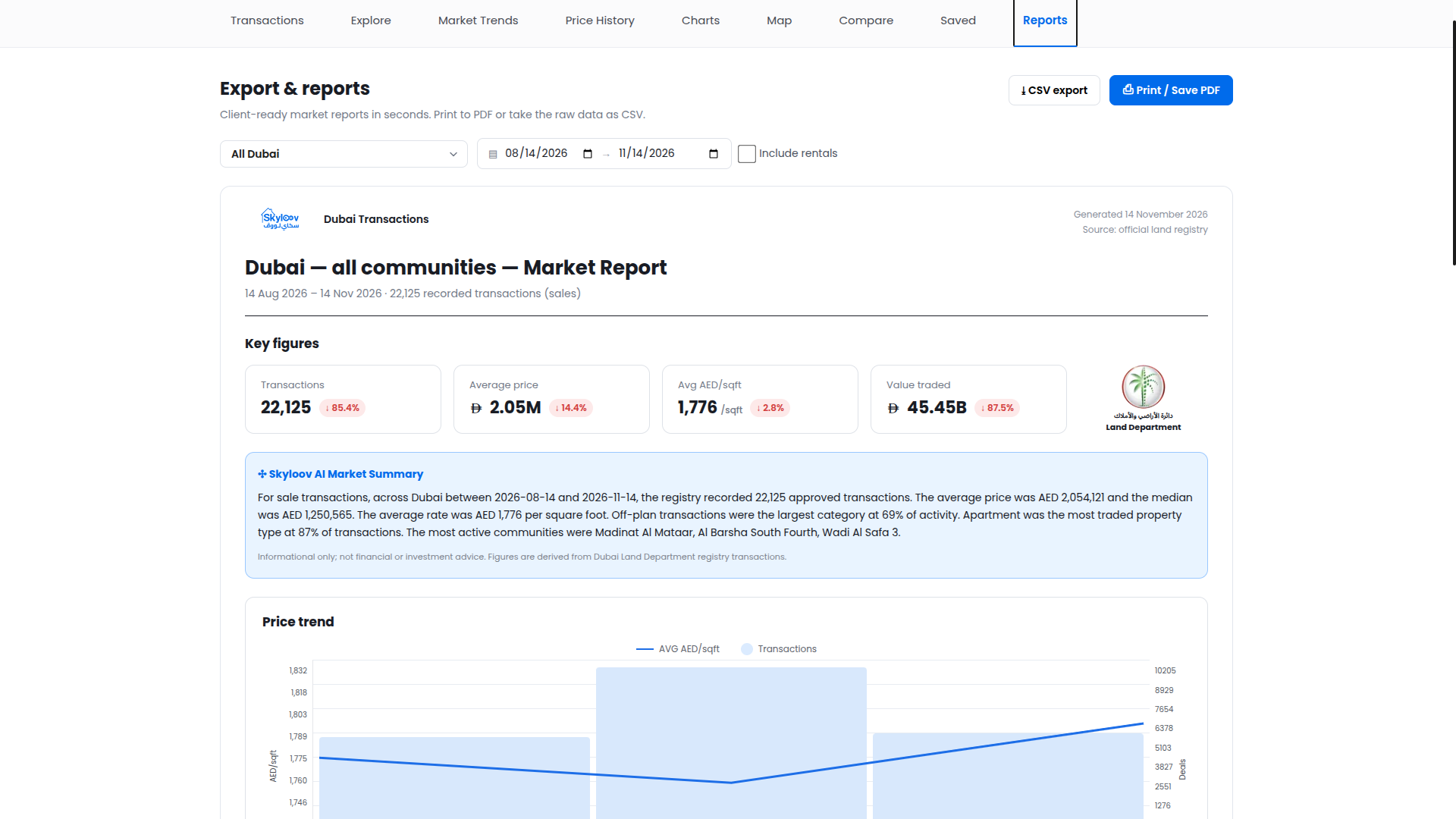
DXB Transactions Exports
Product Context
- Skyloov is a UAE-based real estate marketplace connecting property seekers with agencies and real estate professionals.
- The platform handles property listings from multiple agencies, making listing quality and agency performance important aspects of the marketplace.
- Evaluating listing quality requires considering multiple signals rather than relying on a single property attribute.
- Dubai's real estate transaction data provides an opportunity to build analytical experiences that help users explore market activity and trends.
- Contributed to both backend services and frontend application development across these product areas.
Agency Listing Scoring Engine
- Designed and implemented a backend scoring engine to evaluate property listings across agency portfolios.
- Developed multi-factor evaluation logic considering listing profiles, property images, ratings, location, and metadata.
- Incorporated agent-related information into the overall evaluation process.
- Integrated call-response metrics as an additional signal for assessing agency performance.
- Designed the scoring workflow to process listings across multiple agencies and evaluate them against multiple quality dimensions.
- Worked on combining different evaluation signals into a consolidated listing quality score.
Maqsam Integration
- Integrated Maqsam telephony APIs to retrieve and incorporate call-related information into the scoring workflow.
- Connected external telephony data with the platform's agency and listing evaluation processes.
- Incorporated call-response information as an additional input into agency performance assessment.
- Worked on integrating external API data with existing backend business logic.
- Connected telephony-related signals with the broader multi-factor evaluation system.
DXB Transactions Analytics
- Contributed to the development of DXB Transactions, a dedicated real estate transaction analytics experience.
- Built frontend implementations for a data-intensive analytics dashboard focused on Dubai property transactions.
- Developed interactive data visualizations and detailed charts to make transaction information easier to explore.
- Worked on presenting transaction data through structured analytical views.
- Implemented frontend interactions and data-driven interfaces for exploring real estate market activity.
- Focused on translating complex transaction datasets into accessible visual insights.
Frontend Engineering
- Worked across the platform's frontend applications, implementing user-facing features and interfaces.
- Integrated frontend functionality with backend services and APIs.
- Developed reusable UI implementations for complex, data-driven workflows.
- Worked on rendering structured backend data into interactive user interfaces.
- Focused on maintainable implementations and consistent user experiences across different product modules.
Engineering Challenges
- Designing a scoring system that considers multiple independent listing quality signals.
- Incorporating heterogeneous evaluation criteria such as images, location, ratings, metadata, and agent information into a unified scoring workflow.
- Integrating third-party telephony data from Maqsam into existing backend evaluation processes.
- Connecting external API responses with the platform's internal business logic.
- Building interactive analytics interfaces capable of presenting complex real estate transaction data.
- Translating large amounts of structured information into meaningful visual representations.
Outcome
- Delivered backend functionality for multi-factor property listing quality evaluation.
- Integrated Maqsam telephony data into agency performance assessment workflows.
- Contributed to the DXB Transactions analytics experience for Dubai real estate market data.
- Delivered frontend implementations across property evaluation and analytics-related product features.
- Contributed to the development of multiple production-facing capabilities within a UAE real estate marketplace.
T E C H S T A C K
P Y T H O N
Backend development
D J A N G O
Backend framework
D J A N G O R E S T F R A M E W O R K
REST API development
C E L E R Y
Asynchronous task processing
P O S T G R E S Q L
Relational database
P O S T G I S
Geospatial data and queries
E L A S T I C S E A R C H
Search and data indexing
R E D I S
Caching and Celery broker/backend
N E X T . J S
Frontend framework
R E A C T
UI development
T Y P E S C R I P T
Type-safe frontend development
R E D U X
Frontend state management
C H A R T . J S
Data visualization and analytics
S C S S
Styling
D O C K E R
Containerization
A W S E C 2
Compute infrastructure
A W S E C S
Container orchestration
A W S S 3
Object and media storage
A W S C L O U D F R O N T
Content delivery
A W S R D S
Managed relational database
W H A T I L E A R N E D
Multi-factor scoring requires thoughtful modeling
Combining listing profiles, images, location, ratings, metadata, agent information, and call-response metrics into a unified evaluation system requires carefully defining how individual signals contribute to the overall score.
External integrations introduce additional complexity
Integrating telephony APIs such as Maqsam demonstrates the importance of connecting third-party data sources with internal business workflows while accounting for differences in data structures and API behavior.
Data visualization is an engineering problem
Building transaction analytics interfaces involves more than rendering charts. The underlying data needs to be structured and presented in ways that make complex information easier to explore and understand.
Full-stack ownership requires understanding the complete data flow
Working across backend scoring logic, external integrations, and frontend analytics reinforced the importance of understanding how data moves through different application layers and ultimately reaches the user.